

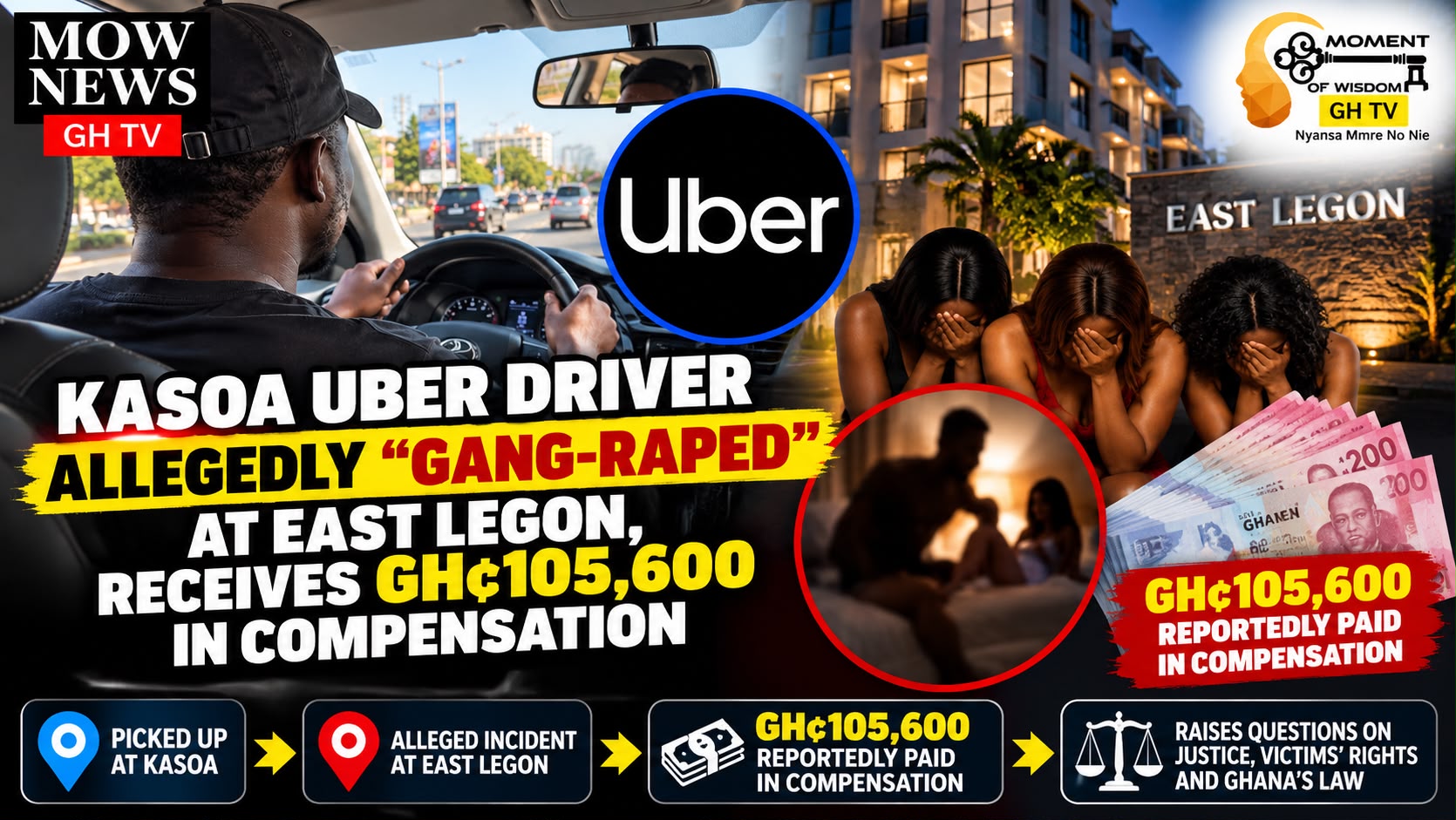
A report circulating on social media claims that a ride-hailing driver from Kasoa, who was allegedly sexually assaulted by a group of women at East Legon in Accra, has received GH¢105,600 in compensation from the women said to have been involved.
The claim, featured in a news graphic dated October 8, 2026, has raised questions about the circumstances of the alleged incident, the reported payment and the legal implications of resolving sexual assault allegations through financial settlements.
According to reports published in early October, the driver, who reportedly resides at Budumburam near Kasoa, narrated his experience during an interview on Kasapa FM.
He alleged that three women booked his vehicle for a journey to East Legon Hills and subsequently invited him into an apartment, ostensibly to familiarise himself with the location ahead of another trip the following morning.
The driver claimed that once inside, the women locked the door, prevented him from leaving and subjected him to non-consensual sexual activity.
He further alleged that he became physically weak following the encounter and later sought assistance from the police, where he claimed his complaint was not taken seriously.
In a development reported on October 8, the driver allegedly received GH¢105,600 after previously indicating that he wanted approximately GH¢100,000 in compensation for his experience. According to the report, the presenter displayed what was described as evidence of payment during a Facebook livestream.
The controversy intensified after media reports quoted a woman claiming to be among those involved.
Speaking during a radio discussion, she reportedly questioned the driver’s complaint and suggested that the encounter had been consensual.
She also reportedly made claims about previous encounters involving other men.
The incident has prompted renewed discussion about the legal protection available to male victims of sexual violence.
Private legal practitioner Noah Ephraem Tetteh Adamtey explained that Ghana’s statutory definition of rape under Section 98 of the Criminal Offences Act, 1960 (Act 29), presents difficulties where a man alleges forced sexual intercourse by women.
He indicated that other criminal offences, including indecent assault, assault and unlawful restraint, could potentially be relevant depending on the evidence and circumstances
The discussion highlights the importance of examining whether Ghana’s criminal laws provide sufficiently comprehensive protection to every victim of sexual violence, regardless of gender.
The reported settlement raises an important legal and ethical question: Can a financial payment adequately resolve allegations of serious sexual assault?
Financial compensation may provide a measure of relief to someone who has suffered harm. However, a private settlement does not automatically determine criminal responsibility or prevent the authorities from investigating conduct that may constitute an offence.
The legal consequences depend on the applicable law, available evidence and decisions of the relevant authorities.
Any investigation must also respect the rights of the accused persons, including the presumption of innocence. This case raises broader concerns about how society responds when men report sexual abuse. Sexual violence should never become a subject of ridicule simply because the complainant is male.
A person’s physical response during sexual activity does not establish consent. Consent must be freely given, and allegations of coercion deserve careful and impartial investigation.
Likewise, women accused of such conduct must not be declared guilty through social media commentary without evidence and due process.
The reported GH¢105,600 payment should not overshadow the more important questions: What actually happened? Was there consent? Were the allegations properly investigated? And what protection does Ghanaian law provide to male victims?
Justice must not depend on the gender of the complainant or the financial standing of the people accused.
The case remains an important opportunity for public education about consent, accountability, victims’ rights and equal treatment under the law.
Moment of Wisdom; Time for Wisdom.
Editor’s note: This report distinguishes the driver’s allegations, media accounts of a financial settlement and independently established facts. No court judgment or official police conclusion confirming the alleged assault or settlement was identified in the sources reviewed.

