

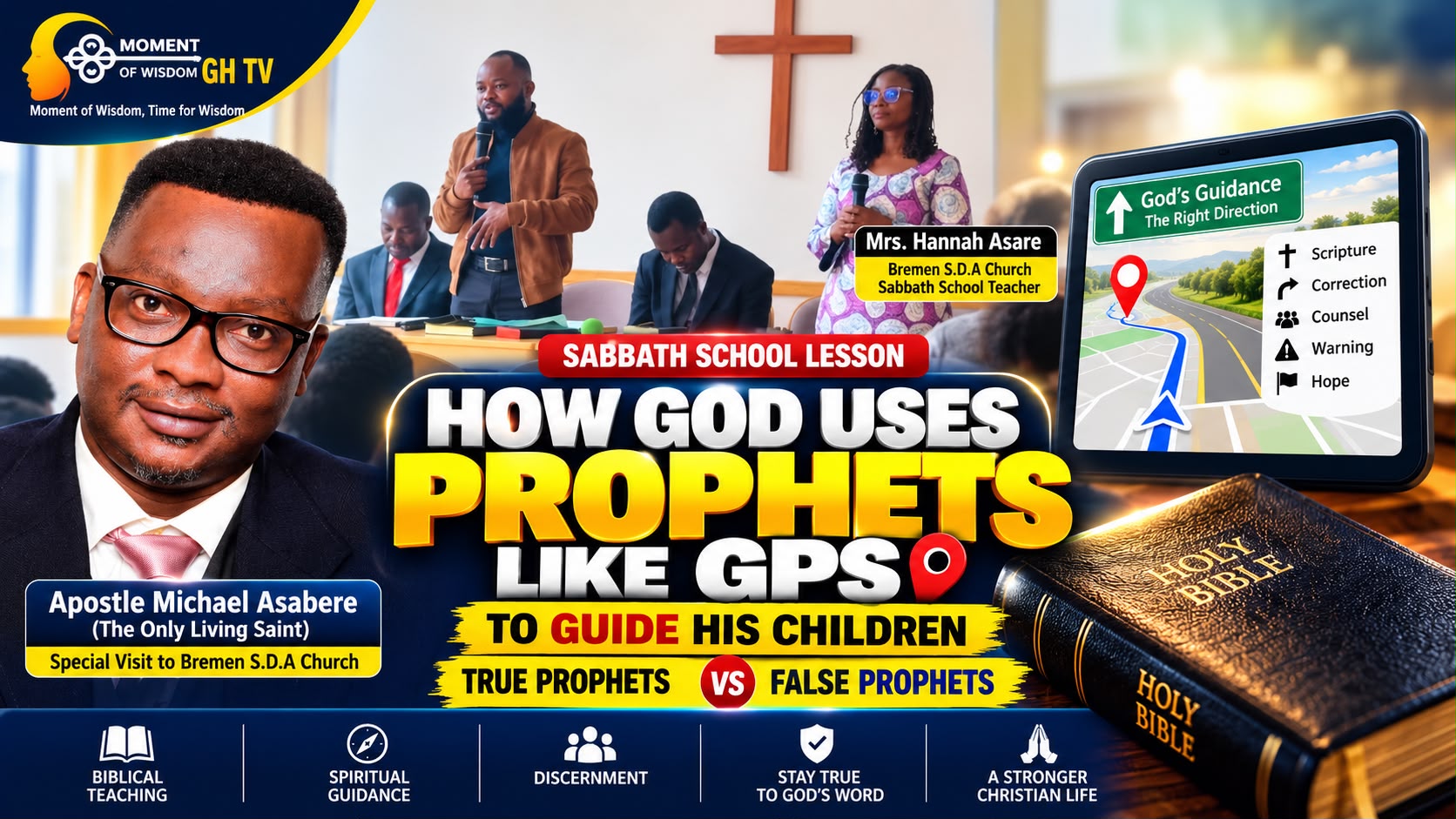
The Bible presents prophets as people called to communicate God’s messages.
They were not simply individuals who predicted future events. Their responsibilities also included warning against wrongdoing, encouraging repentance, defending justice and reminding God’s people of their covenant responsibilities.
Consider Moses, Elijah, Samuel, Isaiah, Jeremiah and other biblical prophets.
Although their circumstances differed, they shared a responsibility to communicate God’s will.
The comparison between GPS navigation and biblical prophets has particular relevance in an age when religious messages spread rapidly through digital media.
Believers may encounter contradictory teachings from different churches and religious personalities.
Some messages encourage humility, love and faithfulness. Others may create fear, hostility or unhealthy dependence on religious leaders.
Christians should neither reject every claim of spiritual guidance without examination nor accept every claim merely because someone invokes God’s name.
The biblical approach is to examine such claims responsibly.
For Ghanaian Christians living in Germany and elsewhere, this lesson offers an opportunity to reflect on how faith, Scripture and spiritual discernment should shape everyday decisions.
It also reminds church leaders that spiritual authority carries responsibility.
The credibility of Christian ministry should rest on truthfulness, accountability, humility and service rather than celebrity or personal influence.
Mrs. Hannah Asare’s GPS illustration presents a question worth considering:
When the directions we receive conflict with God’s Word, which voice should we follow?
A GPS can sometimes provide incorrect directions because its information is outdated or incomplete. Human religious leaders can also misunderstand Scripture or make mistakes.
That is why Christians must continually return to the Bible and prayerfully seek the guidance of the Holy Spirit.
The purpose of spiritual leadership should not be to make believers permanently dependent on a human personality. It should be to help them grow in their knowledge of God.
As Apostle Michael Asabere reflects on this Sabbath School teaching during his visit to Bremen SDA Church, the central lesson is clear:
Do not follow a prophet merely because the prophet speaks confidently. Examine the message, test it against Scripture and keep Jesus Christ at the centre of your faith.
Through the examples of Elijah, Micaiah, Jeremiah, Miriam, Deborah and other biblical figures, the lessons demonstrate that prophets were human beings entrusted with important spiritual responsibilities.
Some delivered encouragement. Others communicated difficult warnings. Their responsibility was to remain faithful to God’s message.
The GPS illustration helps communicate this principle in a language modern audiences can understand.
But the greatest lesson is not simply that God provides directions.
It is that believers must develop the wisdom to recognise trustworthy spiritual guidance.
Moment of Wisdom — Time for Wisdom!
By Apostle Michael Asabere
The Only Living Saint
Moment of Wisdom GH TV
www.momentofwisdomgh.com

