

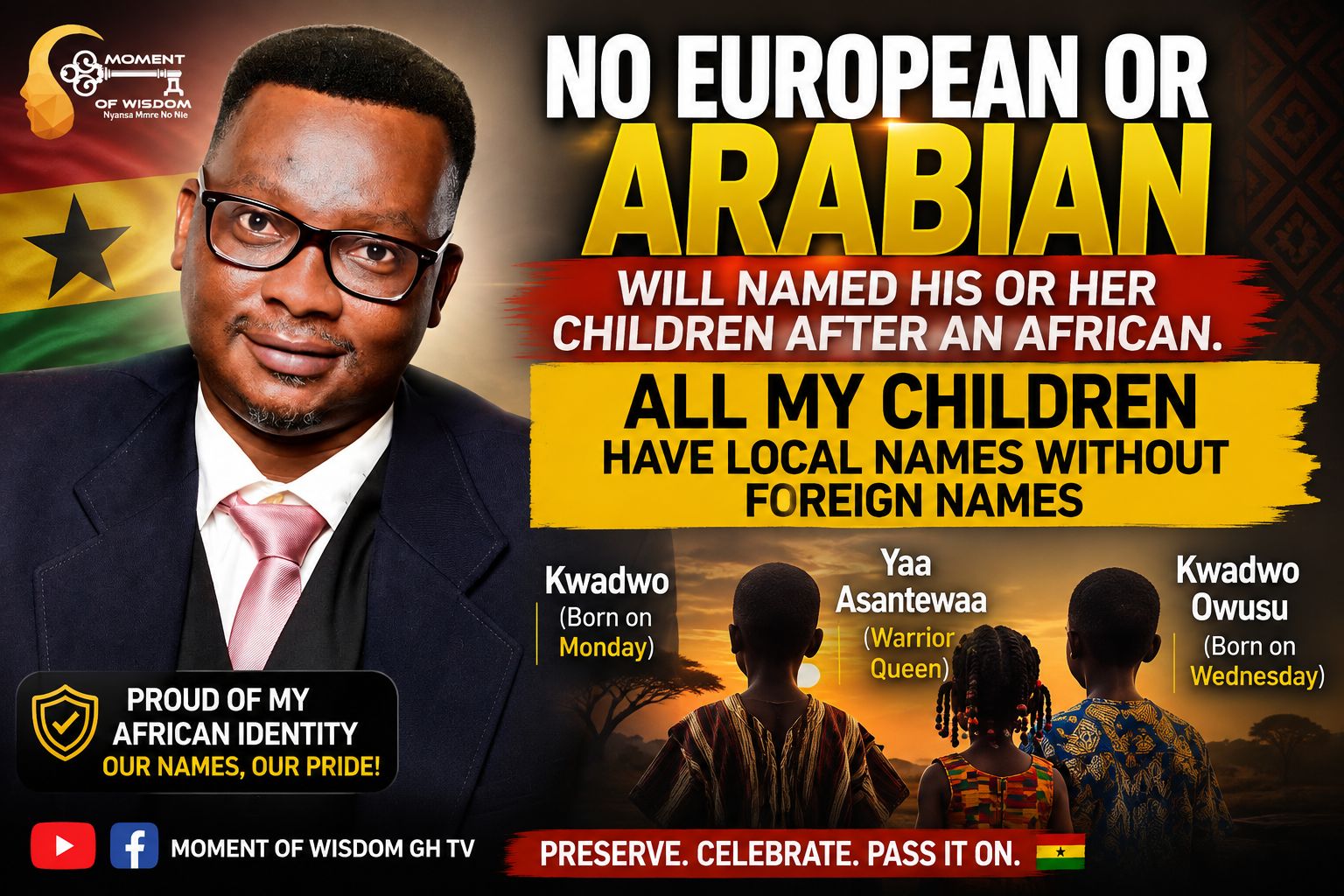
Names are more than words used to identify us. They can carry history, family identity, circumstances of birth, cultural heritage and the hopes parents have for their children. For Apostle Michael Asabere, popularly known as “The Only Living Saint,” choosing African names for his children is a deliberate celebration of that heritage.
In a message likely to spark discussion among Africans at home and throughout the diaspora, Apostle Asabere asks a provocative question: Why should Africans abandon their indigenous names in favour of foreign ones?
His position is simple: Africans should be proud of the names handed down through their cultures and communities.
“My Children Have Local Names”
Apostle Asabere points to his own family as an example. His children bear Ghanaian names, including Nana K. A. Asabere, Yaa Asantewaa Asabere, Kwadwo Owusu Afriyie and Kwadwo Osei Afriyie.
For him, this was not accidental. It reflects his desire to ensure that the next generation remains connected to its Ghanaian and African roots.
He argues that Europeans and Arabs generally preserve naming traditions rooted in their own languages, histories and cultures. His broader message is therefore not an attack on foreign names, but a challenge to Africans: if other peoples value their cultural identities, why shouldn’t Africans proudly value theirs too?
African Names Carry Meaning
Across Ghana, traditional names often tell a story.
Among the Akan, for example, day names such as Kwadwo, Kwame, Yaa, Akua, Kofi and Afia connect individuals to the day of the week on which they were born. Other names may honour ancestors, commemorate significant events or express the circumstances surrounding a child’s birth.
The name Yaa Asantewaa, meanwhile, carries particularly powerful historical associations in Ghana because of the legendary Asante queen mother who led resistance against British colonial rule.
Names therefore become living links between generations.
Cultural Pride Does Not Require Rejecting Others
Celebrating African names should not mean disrespecting people who choose Christian, Islamic, European, Arabic or other international names. Ghana itself has centuries of cultural interaction, and many families comfortably combine indigenous and foreign names.
The important question is whether African names are being abandoned because people have come to regard foreign names as more prestigious, modern or acceptable.
That is the mindset Apostle Asabere wants Africans to reconsider.
There should be nothing inferior about introducing yourself to the world as Kwadwo, Yaa, Kwabena, Akosua, Adwoa, Kojo or Abena.
An African name can be spoken proudly in Accra, Kumasi, Berlin, London, Toronto, New York or anywhere else in the world.
The Diaspora Has a Special Responsibility
For African families living abroad, names can become particularly important.
Children growing up thousands of kilometres away from their ancestral communities may naturally adopt the language and customs of the countries in which they live. An indigenous name can provide one permanent connection to their family’s history.
Parents can go further by explaining what the name means, where it comes from and why it was chosen.
That transforms a name from something written on a birth certificate into a story a child can carry throughout life.
Our Names, Our Heritage
Globalisation should allow cultures to meet without requiring smaller cultures to disappear.
Africans can learn foreign languages, live abroad, participate fully in global society and respect other cultures while remaining proud of their own heritage.
Apostle Michael Asabere’s message therefore leaves us with a question worth discussing:
If we do not preserve our African names and teach their meaning to our children, who will preserve them for the generations yet unborn?
Our names tell our stories.
Our names connect generations.
Our names form part of our identity.
Preserve them. Celebrate them. Pass them on. 🇬🇭❤️
Moment of Wisdom GH TV — Time for Wisdom.

