

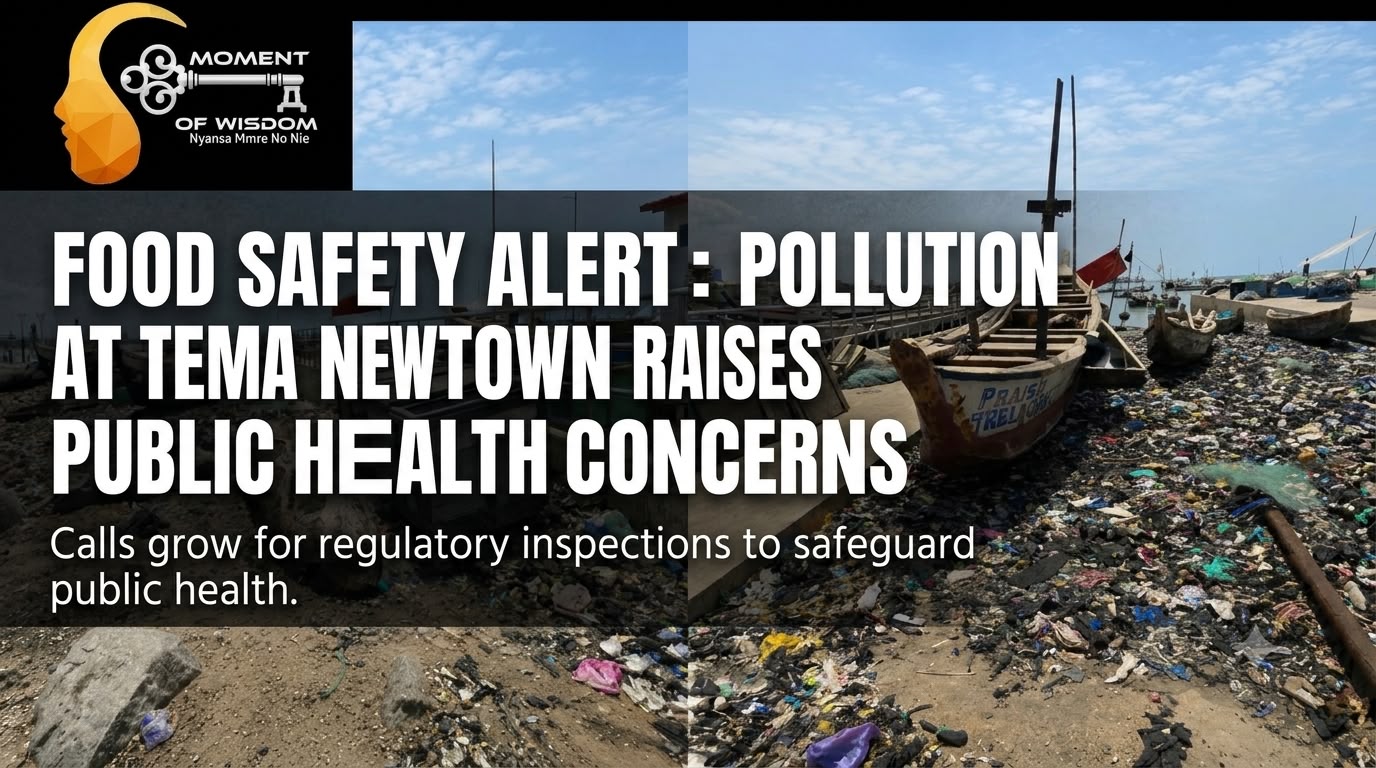
A disturbing video circulating on social media has reignited public concern over environmental sanitation and food safety at Tema Newtown, one of Ghana’s well-known fishing communities.
The footage shows large amounts of plastic waste, household refuse, and other debris scattered along the shoreline where fishing activities take place. The narrator appeals to Ghana’s Food and Drugs Authority (FDA) to urgently investigate the handling, storage, and sale of fish in the area, arguing that poor sanitary conditions could pose a potential health risk to consumers.
The video raises an important public health question: Can fish processed and sold in such an environment consistently meet the hygiene standards expected by consumers?
While the video presents concerning scenes, it does not by itself establish that the fish being sold is unsafe or contaminated. Determining that would require inspections, laboratory testing, and assessments by the appropriate regulatory authorities. Nevertheless, the conditions shown underscore the need for continuous monitoring and stronger environmental sanitation.
Why This Matters
Fish remains one of Ghana’s most important sources of protein, supporting the livelihoods of thousands of families and contributing significantly to the national economy. Maintaining confidence in the safety and quality of fish products is therefore essential.
Environmental pollution around landing beaches can increase the risk of contamination if proper hygiene practices are not maintained during:
- Fish landing
- Cleaning and processing
- Smoking and preservation
- Transportation
- Storage
- Retail sale
This makes sanitation an issue that concerns not only fishermen and fishmongers but also consumers across the country.
A Shared Responsibility
Protecting Ghana’s coastal communities requires collaboration among all stakeholders, including:
- The Food and Drugs Authority (FDA)
- Fisheries Commission
- Environmental Protection Agency (EPA)
- Metropolitan and Municipal Assemblies
- Fishermen and fish processors
- Community leaders
- Residents and consumers
Regular inspections, proper waste management, public education, and enforcement of food safety regulations can help ensure that fish reaching the market is handled under hygienic conditions.
The Way Forward
Rather than creating fear, this moment should encourage constructive action. Clean beaches, responsible waste disposal, and strict adherence to food safety standards will protect public health while preserving the reputation of Ghana’s fishing industry.
Every Ghanaian has a role to play in keeping our beaches clean. Environmental sanitation is not only about protecting nature—it is also about protecting lives.
As Moment of Wisdom GH believes: Clean surroundings produce healthier communities, and healthier communities build a stronger nation.
Moment of Wisdom GH
“Time for Wisdom.”

