

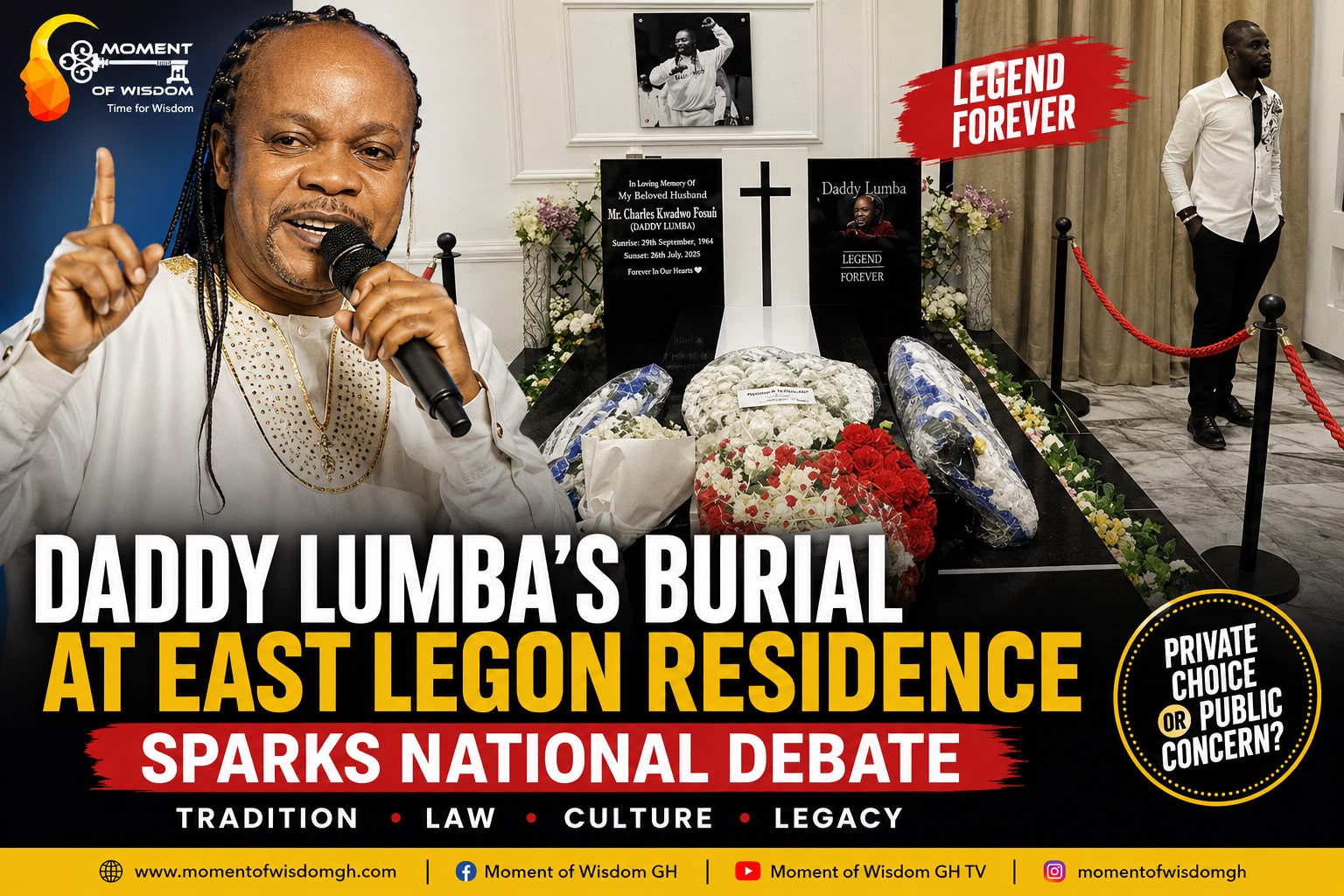
The revelation that Ghanaian highlife legend Daddy Lumba (Charles Kwadwo Fosu) was laid to rest within his East Legon residence has reignited one of the most controversial conversations in Ghana’s recent cultural history. According to his sister, the music icon was buried at his private residence, bringing months of speculation over his final resting place to an end.
The disclosure has generated mixed reactions across the country. While many fans believe the decision reflects the family’s desire to honour Daddy Lumba in a private and dignified manner, others argue that the burial raises important questions about tradition, customary law, and the relationship between private property rights and cultural expectations.
A Decision That Divided Public Opinion
For many Ghanaians, Daddy Lumba was more than a musician. His songs became the soundtrack to weddings, funerals, celebrations, heartbreaks, and national events. Because of his immense influence, many expected a public burial at a cemetery or another nationally recognised location.
Instead, the confirmation that he was buried at his East Legon home has surprised many and intensified public debate.
Supporters of the family’s decision argue that every individual and family should have the freedom to decide how and where a loved one is buried, provided all legal requirements are satisfied.
Critics, however, maintain that the burial location has implications that extend beyond the immediate family, particularly in areas where traditional customs and community norms are deeply respected.
Traditional Authorities Raise Concerns
The controversy is not entirely new. Reports indicate that some Ga-Dangme traditional leaders previously expressed concern over the alleged burial at the East Legon residence, arguing that customary processes should be respected. The matter even generated legal and traditional discussions before the family eventually confirmed the burial location.
These developments illustrate the delicate balance between modern family decisions and long-standing cultural traditions in Ghana.
Should Ghana Review Its Burial Laws?
The Daddy Lumba case may become an important reference point for future discussions on burial practices in Ghana.
Questions now being asked include:
- Should prominent national figures be buried in private residences?
- Should there be clearer national regulations governing residential burials?
- How should customary authorities, local government, and families work together in such situations?
- Can personal wishes coexist peacefully with traditional expectations?
These are conversations that extend far beyond one individual.
Moment of Wisdom’s Perspective
At Moment of Wisdom, we believe that every family deserves compassion during moments of grief. At the same time, matters involving culture, tradition, and public interest should be approached through respectful dialogue rather than hostility.
Daddy Lumba’s extraordinary contribution to Ghanaian music remains undisputed. Regardless of differing opinions about his burial, his legacy continues to inspire generations of musicians and millions of fans across Ghana and the world.
Perhaps the greatest tribute Ghanaians can pay him is not endless controversy, but preserving his timeless music while using this moment to have mature national conversations about culture, tradition, family rights, and the future.
May the soul of the Highlife legend continue to rest in peace.
Moment of Wisdom GH
“Time for Wisdom.”

