

By Moment of Wisdom Blog
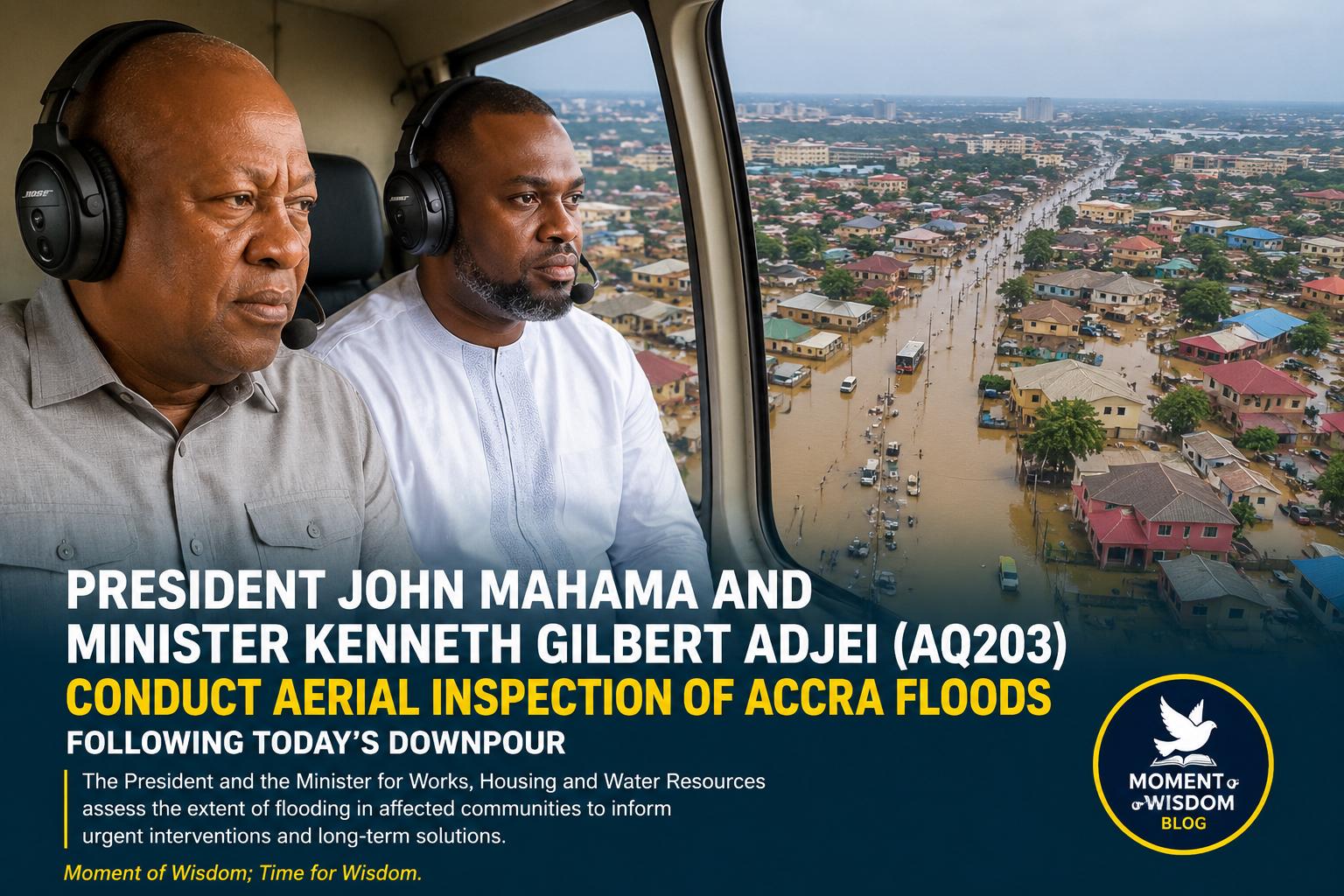
President John Dramani Mahama, accompanied by the Minister for Works, Housing and Water Resources, Hon. Kenneth Gilbert Adjei (AQ203), conducted an aerial inspection of flood-hit areas in Accra following today’s heavy downpour that left several communities submerged.
The aerial assessment was aimed at giving the government a firsthand understanding of the extent of the devastation caused by the floods. The inspection covered some of the hardest-hit areas where roads became impassable, homes and businesses were inundated, and normal economic activities were brought to a standstill.
The President assured Ghanaians that the government remains committed to protecting lives and property while working with the relevant agencies to provide immediate relief to affected residents. He emphasized the need for both short-term emergency interventions and long-term engineering solutions to address the persistent flooding challenge in the national capital.
Hon. Kenneth Gilbert Adjei, an alumnus of Opoku Ware School (AQ203), reiterated the government’s determination to accelerate ongoing drainage improvement projects and other flood mitigation measures. He noted that sustainable urban planning, effective drainage systems, and responsible environmental practices are essential to reducing the impact of flooding in Accra.
Flooding has remained one of Ghana’s recurring environmental challenges, particularly during periods of intense rainfall. Experts have consistently attributed the problem to inadequate drainage infrastructure, indiscriminate waste disposal, and uncontrolled development along waterways.
The visit by the President and the Minister demonstrates the government’s commitment to assessing the situation personally before implementing the necessary interventions. Many Ghanaians will be looking forward to seeing practical measures that not only address the current disaster but also provide lasting solutions to prevent future occurrences.
Moment of Wisdom
Natural disasters remind us that leadership is not only about making decisions from the office but also about standing with the people during difficult times. While emergency response is crucial, preventing future floods will require collective responsibility from government, local authorities, and every citizen. Keeping drains free of waste, enforcing planning regulations, and investing in resilient infrastructure are shared responsibilities that can help save lives.
Moment of Wisdom; Time for Wisdom.

